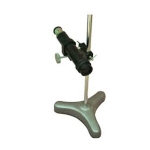
Quick Answer: The Earth-Moon System is an astronomy teaching model for showing how the Moon revolves around Earth and how sunlight produces lunar phases and eclipses. Students move the Moon around Earth with a light source standing in for the Sun.
Last updated: October 2026
Key Features
Shows the Moon’s revolution around Earth and the sequence of lunar phases
Demonstrates solar and lunar eclipse alignment
Shows umbra, penumbra and shadow formation
Introduces Earth rotation and day-night concepts
About This Product
Lunar phases and eclipses are hard to follow from flat diagrams, and the model lets a class see them from the side. Placing the Moon between the Sun and Earth gives a solar eclipse, putting Earth between the Sun and Moon gives a lunar eclipse, and moving the Moon around its orbit shows new moon, first quarter, full moon and last quarter. Schools, colleges and institutes in Laos, Belgium, Kiribati, Republic of the Congo and Tanzania can order the Earth-Moon system from Educational Instrument.
Frequently Asked Questions
How is a lunar eclipse shown with the Earth-Moon System?
Place Earth between the light source representing the Sun and the Moon, so that the shadow of Earth falls on the Moon.


.png)