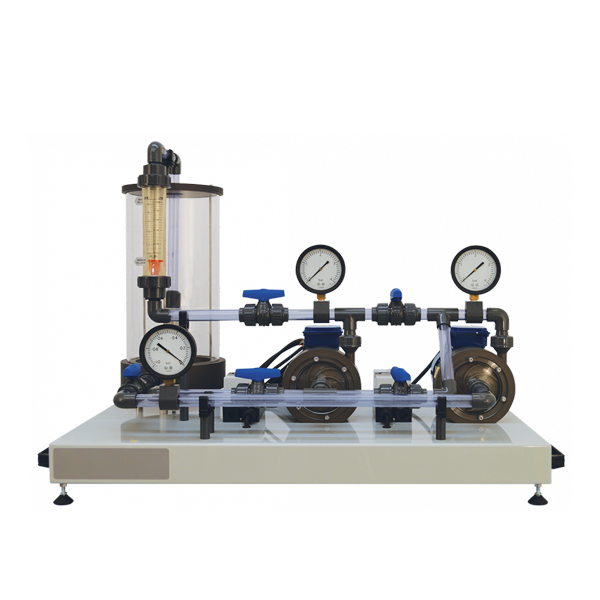
Quick Answer: The Series and Parallel Pumps apparatus has two identical centrifugal pumps, each driven independently by its own bearing-mounted motor. The pumps draw water from a clear acrylic reservoir and deliver it through valves to a flow measurement device.
Last updated: October 2026
Key Features
Two identical centrifugal pumps
Two bearing-mounted motors, one driving each pump independently
Clear acrylic reservoir; water returns to it for re-use
Valve network routes the delivery to a flow measurement device
Adjustable inlet and delivery valves set different operating conditions
Pressure gauges in the intake and delivery pipes show pump inlet and outlet pressures
Technical Specifications
Specification
Value
Pumps
Two identical centrifugal pumps
Drive
Two bearing-mounted motors, independent
Reservoir
Clear acrylic
Pressure measurement
Gauges in intake and delivery pipes
Control
Adjustable inlet and delivery valves
About This Product
Running two pumps singly, in series and in parallel shows students how combined pumps change the head and flow a system can deliver. By adjusting the inlet and delivery valves and reading the gauges, they build head-flow curves for each arrangement and compare them.
Frequently Asked Questions
Are the two pumps driven separately?
Yes. Each of the two identical centrifugal pumps has its own bearing-mounted motor, so they can be driven independently.
Where does the water come from?
The pumps draw from a clear acrylic reservoir, and the water returns to it after passing the flow measurement device.