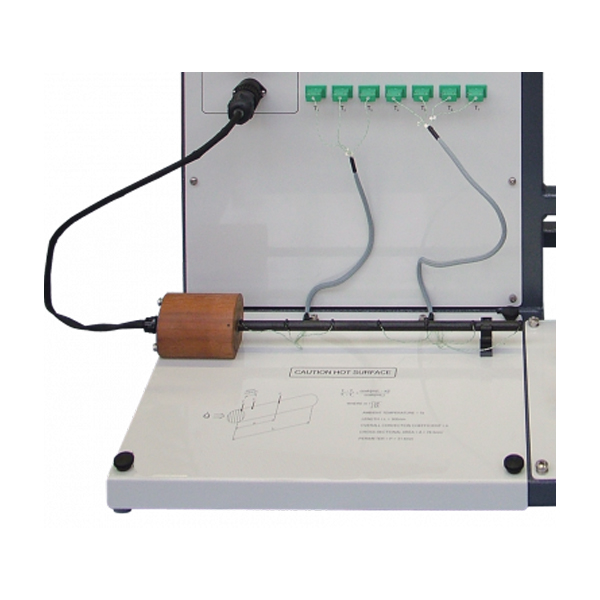
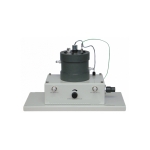
Quick Answer: The Extended Surface Heat Transfer experiment is a thin solid bar with an electric heater at one end and thermocouples at equally spaced points along its surface. The bar has a matt black coating for a consistent emissivity value.
Last updated: October 2026
Key Features
Thin solid bar heated at one end by an electric heater
Thermocouples measure surface temperature at equally spaced intervals
Matt black coating gives a consistent, predictable emissivity
Mounted on a base plate with a clear schematic of the layout
Heater and thermocouples plug into sockets on the Heat Transfer Experiments Base Unit
Technical Specifications
Specification
Value
Element
Thin solid bar with matt black coating
Heat source
Electric heater at one end
Sensors
Thermocouples at equally spaced intervals
Mounting
Base plate with schematic
Connects to
Heat Transfer Experiments Base Unit
About This Product
The bar behaves like a fin: heat conducts along it and is lost to the surroundings by natural convection and radiation, so the temperature falls with distance from the heater. Students use their first test results to predict temperatures and heat flow along the bar, then check the prediction.
Frequently Asked Questions
What does the Extended Surface Heat Transfer experiment connect to?
The electric heater and thermocouples connect to sockets on the Heat Transfer Experiments Base Unit.