Whirling of Shafts and Critical Speed Apparatus
Product Code : EL-TOMP-11419
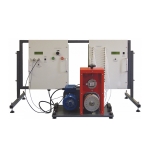
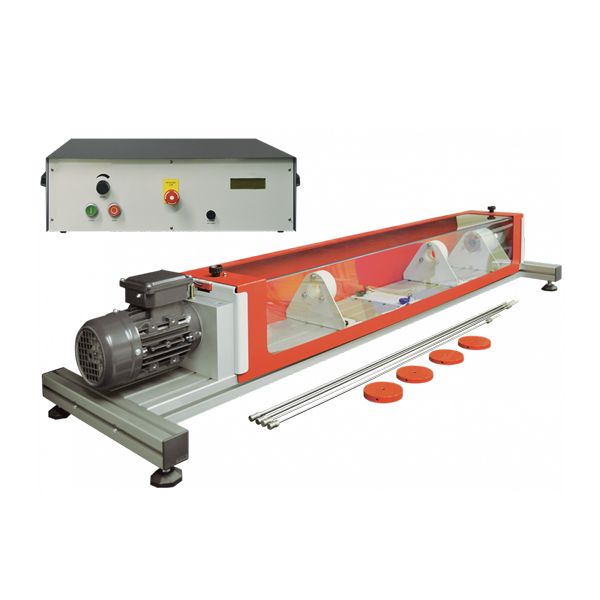
Quick Answer: The Whirling of Shafts and Critical Speed Apparatus is a two-part bench unit in which a variable-speed motor on a solid alloy frame turns a horizontal test shaft. A separate control and instrumentation unit drives the motor and displays the shaft speed.
Last updated: October 2026
Key Features
- Solid alloy frame holding a variable-speed motor and a horizontal test shaft
- Driven-end and tail-end bearings allow free angular shaft movement (free ends condition)
- Tail-end bearing slides in its housing so the shaft length can change as it whirls
- Two movable nylon bushes keep the whirling amplitude from becoming excessive
- Movable cord plate helps students control the shaft to reach the second mode whirl speed
- Removable guard with magnetic interlock; the motor works only when the guard is fitted
Technical Specifications
| Specification | Value |
|---|---|
| Construction | Two parts; fits on a bench or desk |
| Frame | Solid alloy |
| Drive | Variable-speed motor |
| Bearings | Driven end and sliding tail end (free ends) |
| Speed sensing | Sensor at the driven end, shown on the control unit display |
| Guard | Removable, magnetic interlock |
About This Product
The apparatus shows how a rotating shaft begins to whirl as its speed rises through a critical value. With both bearings acting like simple knife-edge supports, students study the free ends condition, and the cord plate helps them take the shaft on to its second mode whirl speed.
Frequently Asked Questions
Why does the tail-end bearing slide in its housing?
It lets the shaft length change as the shaft whirls, while both bearings still allow free angular movement of the shaft.
Related: Theory of Machines Products, Free and Forced Vibrations and Universal Vibrations Apparatus.
For a quotation on the Whirling of Shafts and Critical Speed Apparatus, contact Educational Instrument.